Minigrids "full circle" moment in India
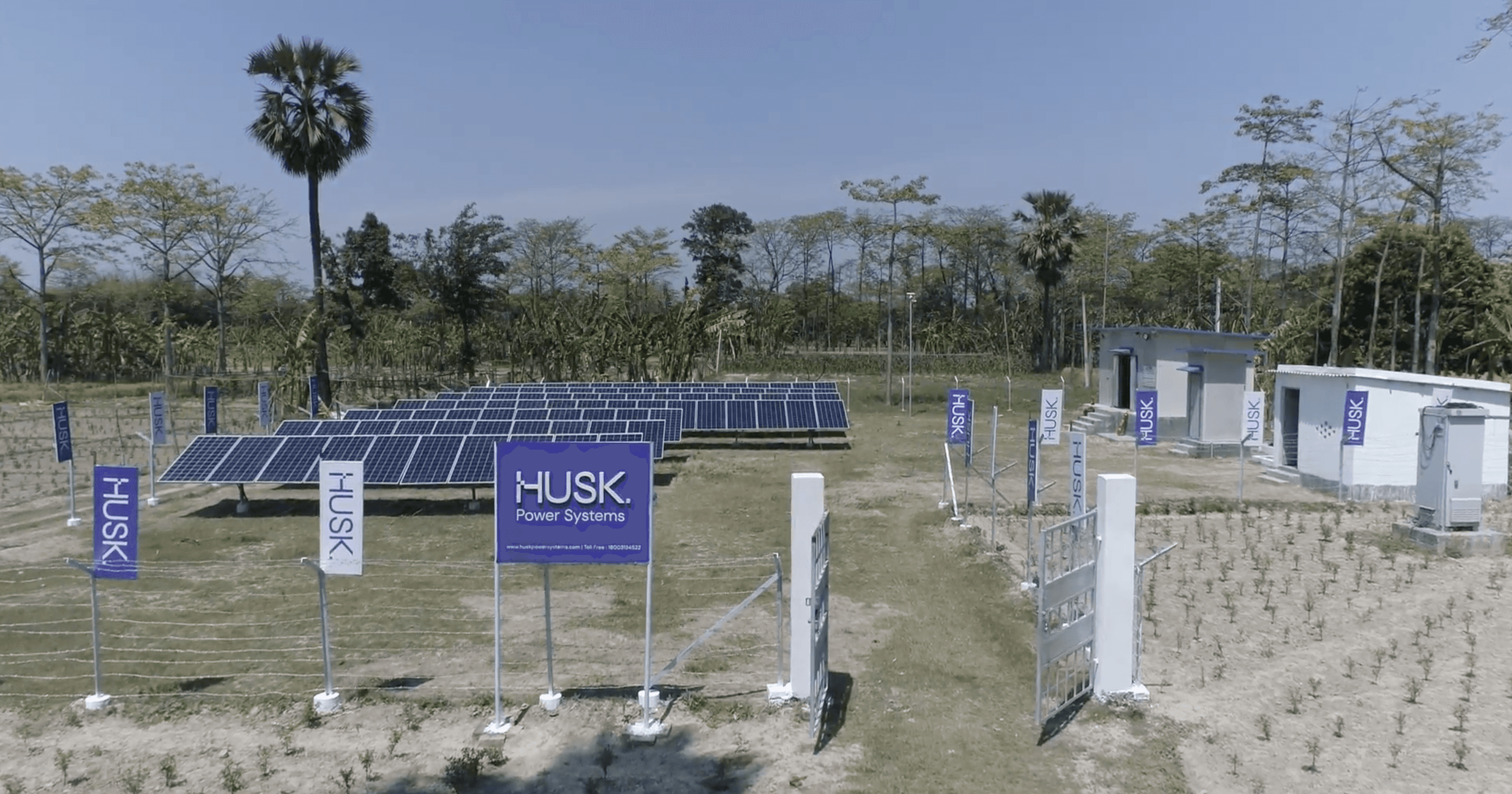
When Husk Power was founded in India in 2008, the grid in rural India was more a myth than a utility. For hundreds of millions of people, darkness wasn't a choice; it was a geographic destiny. Our first community minigrids weren’t just energy assets; they were lifelines. We filled a massive structural void, proving that distributed solar and batteries could do what the central state could not: not only turn the lights on but power whole economies with reliable and quality power.
Then came the Saubhagya scheme in 2017. As poles marched across the countryside and national electrification rates climbed toward 100%, many pundits penned our obituary. The grid had finally arrived, and the logic for minigrids seemed to diminish significantly. If the state was providing a connection, why did we need a local island of power?
Today, we are witnessing the India minigrid industry's "full circle" moment. We’ve moved from a period of "Minigrid vs. Grid" to an era of "Minigrid + Grid."
The Evolution of the Indian Power Landscape
Era | Focus | Role of Minigrids |
2008-2016 | Access Deficit | The primary source of electrification |
2017-2022 | Grid Expansion | Uncertainty; perceived as a redundant backup |
2023-onward | Quality & Resilience | A critical partner for a decarbonized, stable grid |
The "second coming" of distributed energy resources (DER) is fueled by a shift in policy and necessity. New government frameworks are recognizing that the central grid, while expansive, is often fragile, carbon-intensive and financially unsustainable.
Minigrids are no longer confined to the furthest village. In peri-urban and urban centers, our 300 minigrids are now "Power-as-a-Service" hubs that provide the high-uptime, high-quality green power that small businesses and industries need to thrive—reliability that the aging central infrastructure still struggles to guarantee.
This shift is being further accelerated by India’s Green Energy Open Access rules, which have fundamentally democratized the wires. Traditionally, the ability to bypass the local utility and purchase power directly was a privilege reserved for massive industrial conglomerates. By lowering the threshold for open access, the policy creates a "perfect fit" for the modern minigrid model.
It allows us to move beyond isolated clusters and transition into DER developers for the masses. Under this framework, we can wheel clean, reliable power across the existing distribution network to serve small and medium enterprises (SMEs) that were previously trapped by poor power quality. It effectively turns the national grid into an open highway for our green energy, ensuring that a tailor-made, distributed solution is no longer an "alternative"—it is the preferred standard for an ambitious, energy-hungry India.
By integrating with the national grid rather than fleeing from it, we are building a distributed, digitalized, and decarbonized future. The circle is complete: minigrids are no longer a temporary bridge to the grid; they are the bedrock of its modern resilience.